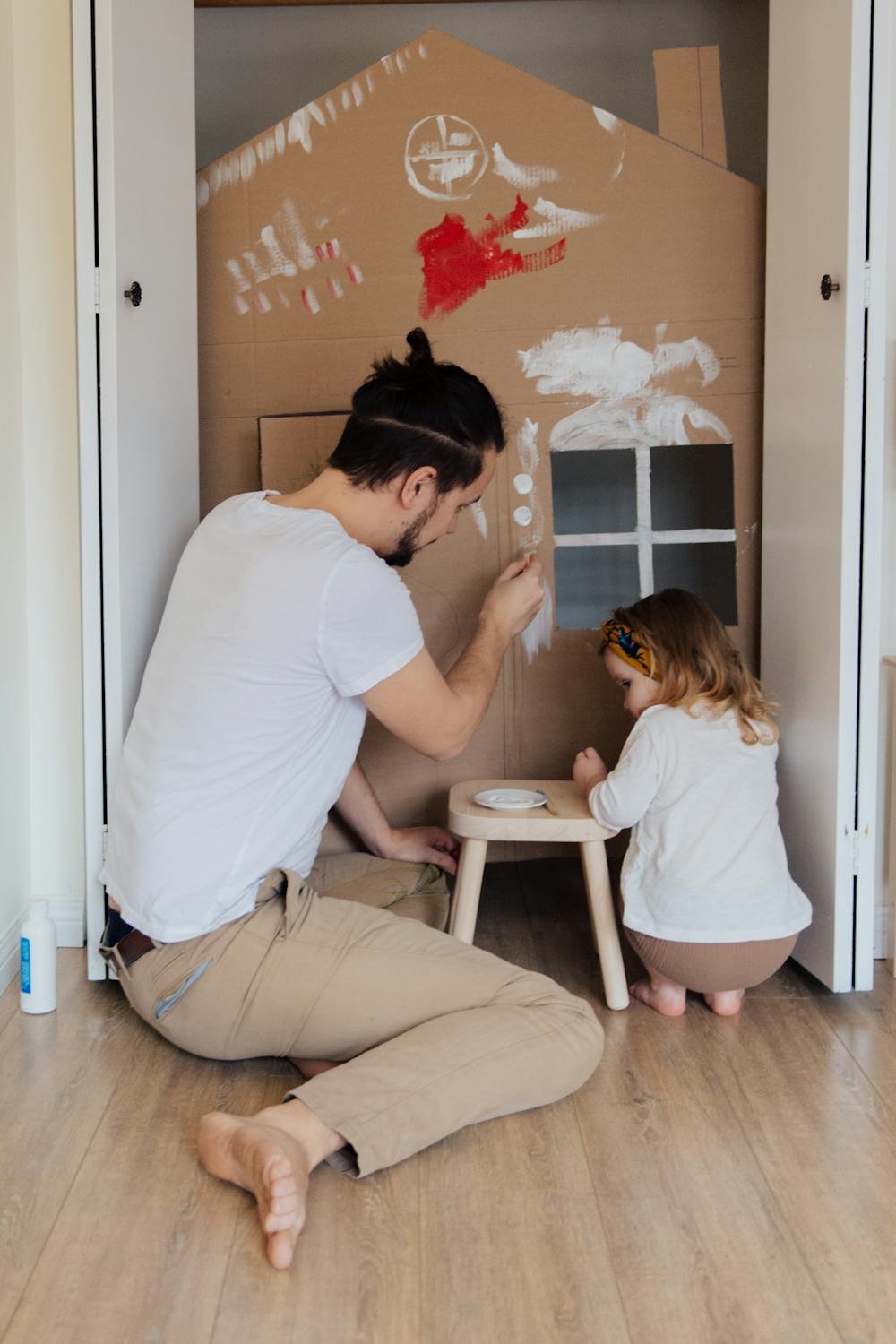
Walk into any parent-child class in Fort Lauderdale on a weekday morning and you’ll notice something that’s been quietly shifting for years: more dads.
Not just the occasional stay-at-home father filling in. Dads who chose to be there. Dads with flexible work schedules who blocked out Tuesday morning specifically for this. Dads who drove 20 minutes to sit on the floor and do a music class with their 18-month-old because they didn’t want to miss it.
The name “Mommy and Me” has been around for decades, and it stuck for a reason — these classes were built in an era when moms were overwhelmingly the ones attending. But the landscape has changed. Remote work, flexible schedules, evolving family structures, and a growing understanding of the father-child bond have all contributed to a noticeable rise in dads attending parent-child classes across South Florida.
And the research says that’s a very good thing.
Why Father-Child Bonding Matters in Early Childhood
The developmental benefits of parent-child classes — social skills, sensory development, language growth, motor skill building — apply regardless of which parent is in the room. But research also points to specific benefits of engaged fatherhood in early childhood:
Physical play patterns differ. Fathers tend to engage in more physical, stimulating play — roughhousing, lifting, spinning, chasing. This kind of play builds gross motor skills, spatial awareness, and risk assessment. It also teaches children to regulate excitement and arousal, a key emotional skill.
Language development gets a boost. A study from the Harvard Graduate School of Education found that when fathers are actively involved in early childhood activities, children show stronger language development. Fathers often use different vocabulary and conversational styles than mothers, which expands a child’s linguistic exposure.
Secure attachment forms through shared experiences. The bond between a child and their father strengthens through consistent, positive shared activities — not just through being present at home, but through doing things together. A structured class gives dads and young children a dedicated time and place for that kind of intentional connection.
Children develop broader social models. When kids see dads dancing in a music class, building with blocks on the floor, or wearing a dress-up hat without hesitation, it normalizes engaged, expressive fatherhood. That modeling shapes how children understand relationships, roles, and emotional availability.
What the Research Actually Shows
The data on father involvement is striking. According to the American Psychological Association, children with engaged fathers show stronger cognitive development, better emotional regulation, and fewer behavioral problems — effects that hold true across income levels, cultural backgrounds, and family structures. Research published in Pediatrics has found that the style of play fathers tend to bring — roughhousing, testing boundaries, playful unpredictability — actually helps children develop resilience and social confidence in ways that complement other forms of caregiving.
Modern Dads Are Already Showing Up
Here is the thing many people miss: today’s fathers are already more involved than any previous generation. A Pew Research Center study on gender and parenting shows that dads are spending significantly more time on childcare than fathers did just a few decades ago. Walk into any open play session at Kids Hideout on a Saturday morning and you will see it firsthand — dads crawling through pretend fire stations, helping toddlers “cook” in the play kitchen, and sitting cross-legged on the floor building block towers. The shift is already happening. Daddy-and-me classes simply give it structure and community.
What Holds Some Dads Back
Despite the shift, many fathers still feel hesitation about attending a “Mommy and Me” class. The reasons are pretty consistent:
The name itself. When a class is literally called Mommy and Me, some dads feel like they’re crashing someone else’s space. The branding suggests the class wasn’t designed with them in mind.
Social dynamics. Walking into a room of 12 moms and being the only dad can feel awkward, especially the first time. Some fathers worry about being out of place or not knowing the routines.
Not knowing what to expect. If you’ve never been to a parent-child class, the format can be unclear. Will I have to sing? Sit on the floor? Dance? (Yes to all three, by the way. And it’s fine.)
Schedule assumptions. Many classes are held weekday mornings, which historically assumed the attending parent didn’t have a traditional 9-to-5 job. As remote and flexible work has expanded, more fathers can attend — but the perception lag remains.
The good news: every one of these barriers is disappearing. More facilities are using the term “parent and child” or “caregiver and child” classes. More dads are showing up, which makes it easier for the next dad to show up. And the awkwardness fades about 30 seconds after your toddler starts laughing.
The “Mom Space” Myth
Walk into many children’s activity centers and the marketing speaks for itself — pastel color palettes, language aimed at “mommy and me,” and social media feeds filled almost exclusively with mothers. It is not intentional exclusion, but it sends a quiet message: this space was not designed with you in mind. The good news is that this is changing. More Fort Lauderdale venues, Kids Hideout included, are making a deliberate effort to create environments where any caregiver feels welcome. Our classes and events are built for parents, grandparents, uncles, and anyone else who plays an active role in a child’s life. You will not find the word “mommy” on our schedule.
Schedule Barriers and How to Work Around Them
For many dads — especially in Fort Lauderdale’s mix of shift workers, remote professionals, and bilingual families juggling multiple jobs — the biggest barrier is not willingness. It is timing. Most traditional parent-child classes run on weekday mornings, which rules out a huge number of fathers. That is why weekend and flexible scheduling matters so much. At Kids Hideout we keep our open play hours available on weekends specifically so working dads do not have to choose between earning a living and being present for these early years.
What Actually Happens in a Daddy-and-Me Class
If you’ve never been, here’s what a typical parent-child class looks like for toddlers and preschoolers:
Music and movement classes (like Zumbini): You and your child sing, clap, dance, shake instruments, and move together for about 45 minutes. It’s designed to build rhythm, coordination, language, and bonding. Will you feel silly? Briefly. Will your kid light up? Absolutely.
Sensory and exploration classes: These often involve stations — water tables, textured bins, paint, playdough, and other tactile materials. Your child explores each one while you guide, encourage, and play alongside them. It’s hands-on, messy, and deeply engaging for little ones.
Movement and coordination classes (like Tiny Toes): Focused on gross motor development — balance beams, floor movements, trampolines, and obstacle courses designed for toddlers. You’re right there spotting, encouraging, and cheering them on.
Open play with guided interaction: Some sessions are less structured — a well-designed play space where you and your child explore together, with staff available to suggest activities or help with transitions.
In every format, the core idea is the same: you’re not dropping your child off. You’re playing with them. You’re on the floor, in the moment, following their lead. That’s the experience.
What Kids Get Out of It
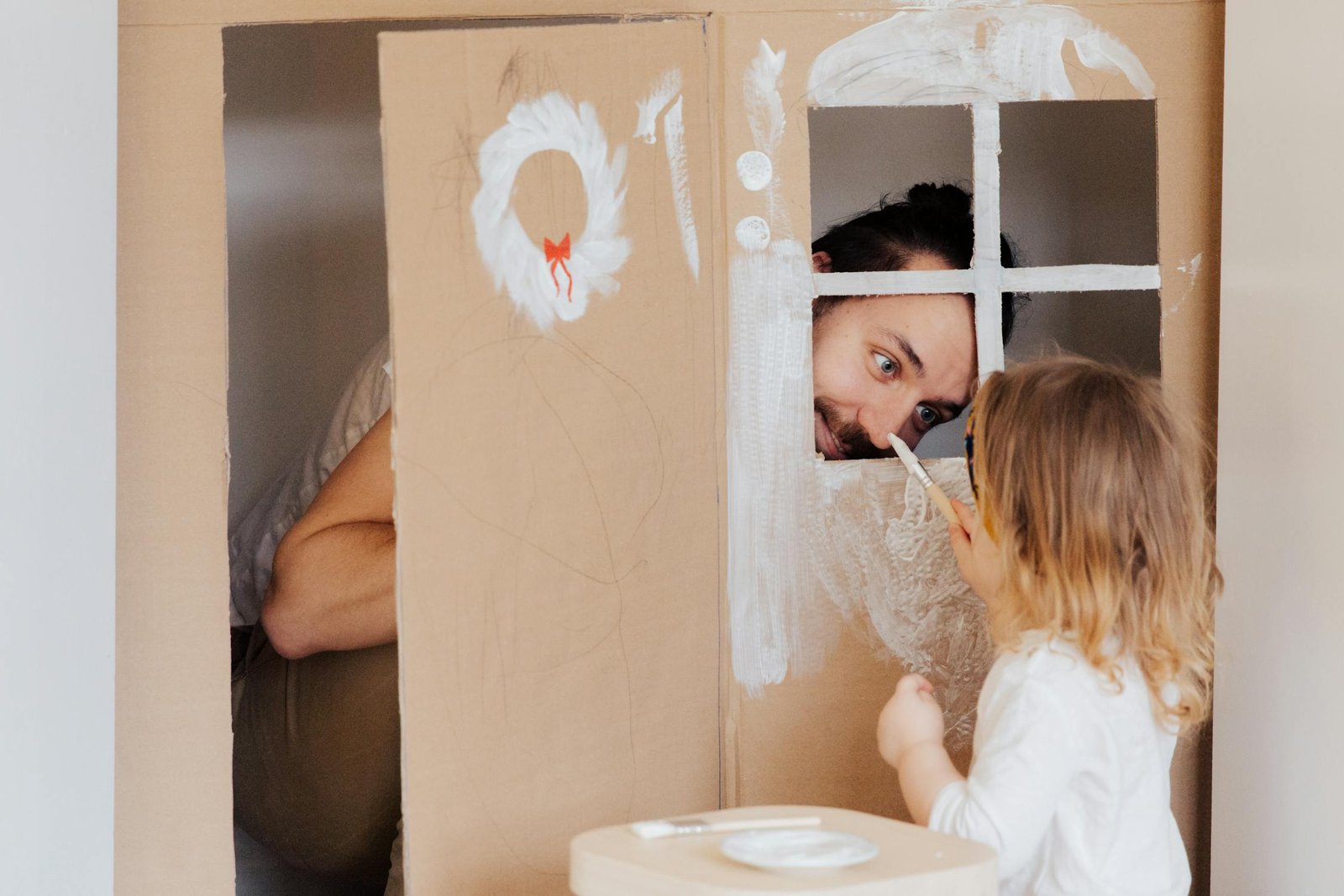
A typical session might include guided music and movement, sensory stations, pretend-play scenarios, and open exploration time. At Kids Hideout, kids rotate through themed play areas — a grocery store, a veterinary clinic, a fire station — where they practice language, cooperation, and creative thinking. According to Zero to Three, this kind of caregiver-child interactive play during the first five years helps build the neural connections that support everything from vocabulary to impulse control. When a child “serves” dad a plate of plastic spaghetti and dad plays along, that back-and-forth is doing real developmental work. For more on why this kind of unstructured play matters, check out our guide to the benefits of open play sessions.
What Dads Get Out of It
Here is something nobody talks about enough: daddy-and-me classes are good for dads, too. Fatherhood can be isolating, especially for first-time dads who may not have a built-in network the way many moms do through prenatal groups or playdates. A structured class gives dads a low-pressure way to meet other fathers, swap stories, and realize they are not the only one figuring this out as they go. It also builds what parenting researchers call “competence confidence” — the more you practice caregiving in a supportive environment, the more natural it feels at home. That confidence carries over into bedtime routines, mealtime battles, and every other part of daily parenting.

What Fort Lauderdale Dads Are Actually Saying
The dads who show up consistently say a few things:
“I didn’t realize how much I needed this.” Between work, responsibilities, and the general speed of life, many fathers don’t have a dedicated time slot for focused, one-on-one play with their child. A class creates that structure.
“My kid acts differently with me here.” Children engage differently with each parent. Some kids who are reserved with one parent light up with the other. The class environment gives fathers a chance to see a side of their child they might miss at home.
“It’s not what I expected.” Most dads walk in expecting it to be awkward and walk out wondering why they waited so long. The classes are designed for the child’s experience, not the parent’s self-consciousness. Once the music starts, nobody’s thinking about who’s a mom and who’s a dad.
“The other kids love it.” Toddlers are fascinated by new adults. When a dad shows up in a class full of moms, the other kids often gravitate toward him — especially for physical play. It’s a role that fills naturally.
👨👧 For Dads: You don’t need to be the “artsy” or “musical” parent to enjoy a daddy-and-me class. The best classes are designed for connection, not perfection. Just show up, get on the floor, and play — your child will remember the time together, not the technique.
How to Find the Right Class as a Dad in Fort Lauderdale
If you’re a father looking to try parent-child classes in Broward County, here’s what to look for:
Language matters. Look for classes that use inclusive terms — “parent and child,” “caregiver and child,” or simply list the class type without gendering it. That signals a space designed for anyone.
Start with what fits your comfort level. If singing feels like a stretch, start with a movement or sensory class. If you’re comfortable being goofy, music and dance classes are some of the most rewarding.
Go during a weekday if you can. Weekday morning classes tend to be smaller and more relaxed, which can make a first visit easier. Weekend classes are great too, but they’re often busier.
Bring your kid’s favorite comfort item. If your toddler has a blanket or stuffed animal that makes new situations easier, bring it. The goal is for both of you to have a good time.
Ask the venue about the vibe. A good facility will tell you honestly what the class dynamic looks like and whether other dads attend regularly. Most places are thrilled to see fathers showing up.
What to Look for in a Daddy-and-Me Program
Not every class will be the right fit, and that is okay. When evaluating a daddy-and-me program, look for a few things: inclusive language in the marketing (not just “mommy and me” rebranded), age-appropriate activities that allow for active participation rather than sitting on the sidelines, small group sizes so your child gets real interaction, and a physical space that feels welcoming to all caregivers. A venue that offers music and movement activities alongside free play gives you variety without needing to sign up at five different places. The CDC’s positive parenting resources are also a great starting point for understanding what kinds of activities match each developmental stage.
Weekend and Evening Options in Fort Lauderdale
Fort Lauderdale’s family scene has expanded well beyond weekday-morning-only programming. Kids Hideout offers open play on weekends, and our themed events and birthday party experiences mean there are always opportunities to engage with your child in a hands-on, screen-free environment — even if your weekday schedule is packed. If you are a dad whose availability is limited to evenings or weekends, start with a single open play visit. No registration, no commitment, just walk in with your kid and play.

It’s Not About Replacing Mom
This isn’t a competition. Daddy-and-me classes don’t replace the bond a child has with their mother — they add to it. Children benefit from having multiple secure attachments, and the research consistently shows that active fatherhood in early childhood leads to stronger emotional, social, and cognitive outcomes.
When a dad sits on the floor, follows his toddler’s lead, sings a song he barely knows, and watches his kid’s face light up — that’s not a nice moment. That’s development happening in real time. For both of them.
How Dad’s Involvement Strengthens the Whole Family
When dads take on dedicated one-on-one time with their kids — whether through a class, open play, or a Saturday morning adventure — the benefits ripple outward. Mom gets a genuine break, not a “watching the kids while scrolling her phone” break but real time to recharge. The child builds a secure attachment to both parents independently. And the co-parenting dynamic shifts: instead of one parent being the “default” for everything child-related, both partners feel competent and confident. Families where both parents share active caregiving report less resentment, better communication, and stronger partnerships overall.
For Fort Lauderdale families — many of whom are navigating bilingual households, blended families, or non-traditional schedules — this shared ownership of the parenting experience is especially powerful. Daddy-and-me time is not a substitute for anything. It is an addition that makes the whole family unit stronger.
Related Reading
- Benefits of Open Play Sessions in Fort Lauderdale
- How Dance and Music Support Toddler Development
- Screen-Free Parenting: Why Tech-Free Spaces Matter
The Bottom Line
The era of the “babysitting dad” is over. Fort Lauderdale fathers are showing up in parent-child classes because they understand something the research has been saying for years: children need engaged, present, playful parents. Not just one. Both.
If you’re a dad who’s been thinking about it — stop thinking and just go. Your kid doesn’t care if you can carry a tune. They care that you’re there.
Kids Hideout offers parent-and-child classes in Fort Lauderdale for babies and toddlers, including Zumbini music classes and Tiny Toes movement classes. Every class includes open play time so you and your child can keep exploring together. See our class schedule here.
What is a Daddy-and-Me class?
A Daddy-and-Me class is a structured parent-child activity session designed for fathers (or any male caregiver) and their young children. Sessions typically include music, movement, sensory play, and pretend play in a supportive group setting. At Kids Hideout in Fort Lauderdale, these experiences happen through guided classes and open play sessions where dads and kids explore themed play stations together.
What age are Daddy-and-Me classes for?
Most Daddy-and-Me programs are designed for children from infancy through age 5, though some venues accommodate kids up to age 8. Kids Hideout offers play experiences for children ages 0 to 8, making it easy for dads with kids at different stages to find something that fits.
What do you do in a Daddy-and-Me class?
Activities vary by program but often include interactive music and movement, sensory exploration, arts and crafts, and imaginative pretend play. At Kids Hideout, kids and dads explore themed play stations such as a grocery store, veterinary clinic, and fire station, engaging in role-play that supports language development, creativity, and parent-child bonding.
Are Daddy-and-Me classes just for dads?
No. While the name highlights father involvement, Daddy-and-Me classes welcome all male caregivers including grandfathers, uncles, stepfathers, and family friends. The goal is to create a space where men feel comfortable and encouraged to engage in hands-on play with young children.
How do I find Daddy-and-Me classes near me in Fort Lauderdale?
Kids Hideout in Fort Lauderdale offers open play sessions and classes designed for all caregivers, including dads. Weekend hours make it accessible for working fathers. Visit kidshideout.com/classes-events to see the current schedule, or stop by for an open play session — no registration required.
Why is father-child bonding important in early childhood?
Research from the American Psychological Association shows that children with actively involved fathers demonstrate stronger cognitive development, better emotional regulation, and fewer behavioral problems. The style of play fathers tend to bring — physical, playful, and boundary-testing — helps children build resilience and social confidence during critical early developmental years.