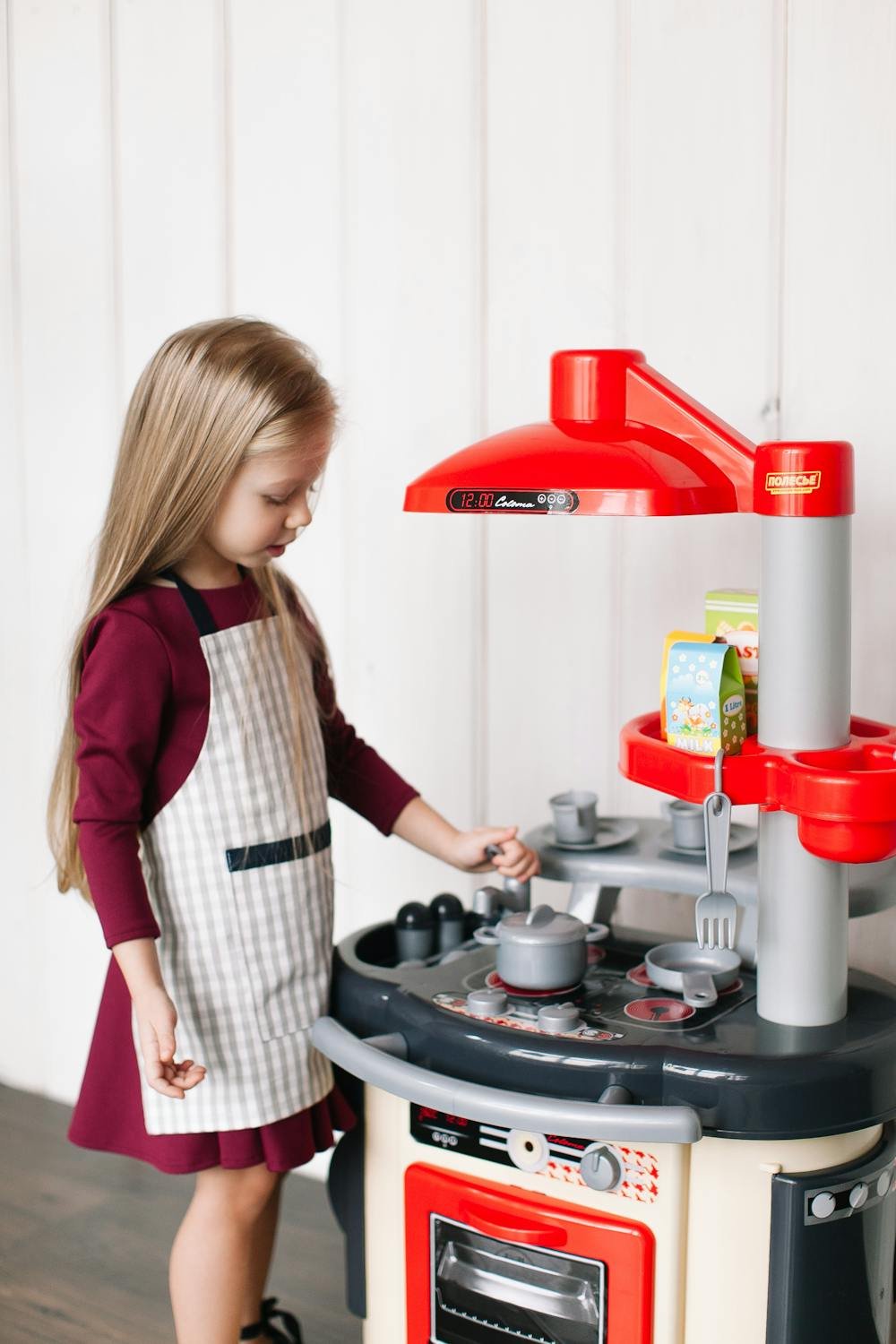
Your three-year-old is standing in a play kitchen, stirring an empty pot with a wooden spoon, and whispering “careful, it’s hot” to no one in particular.
It looks simple. Maybe even pointless to the untrained eye.
But what’s actually happening inside that little brain is extraordinary. Neuroscience and decades of developmental research tell us that pretend play — the kind where kids make believe, take on roles, and create imaginary scenarios — is one of the most powerful learning tools in early childhood.
The American Academy of Pediatrics considers it so important that they now recommend pediatricians write a “prescription for play” at every well-child visit. Not as a nice-to-have. As a developmental necessity.
Here are eight ways pretend play shapes your child’s brain, backed by the research.
1. It Builds Executive Function — the Skill That Predicts School Success
Executive function is the set of mental skills that includes working memory, flexible thinking, and self-control. Research suggests it’s a stronger predictor of academic success than IQ.
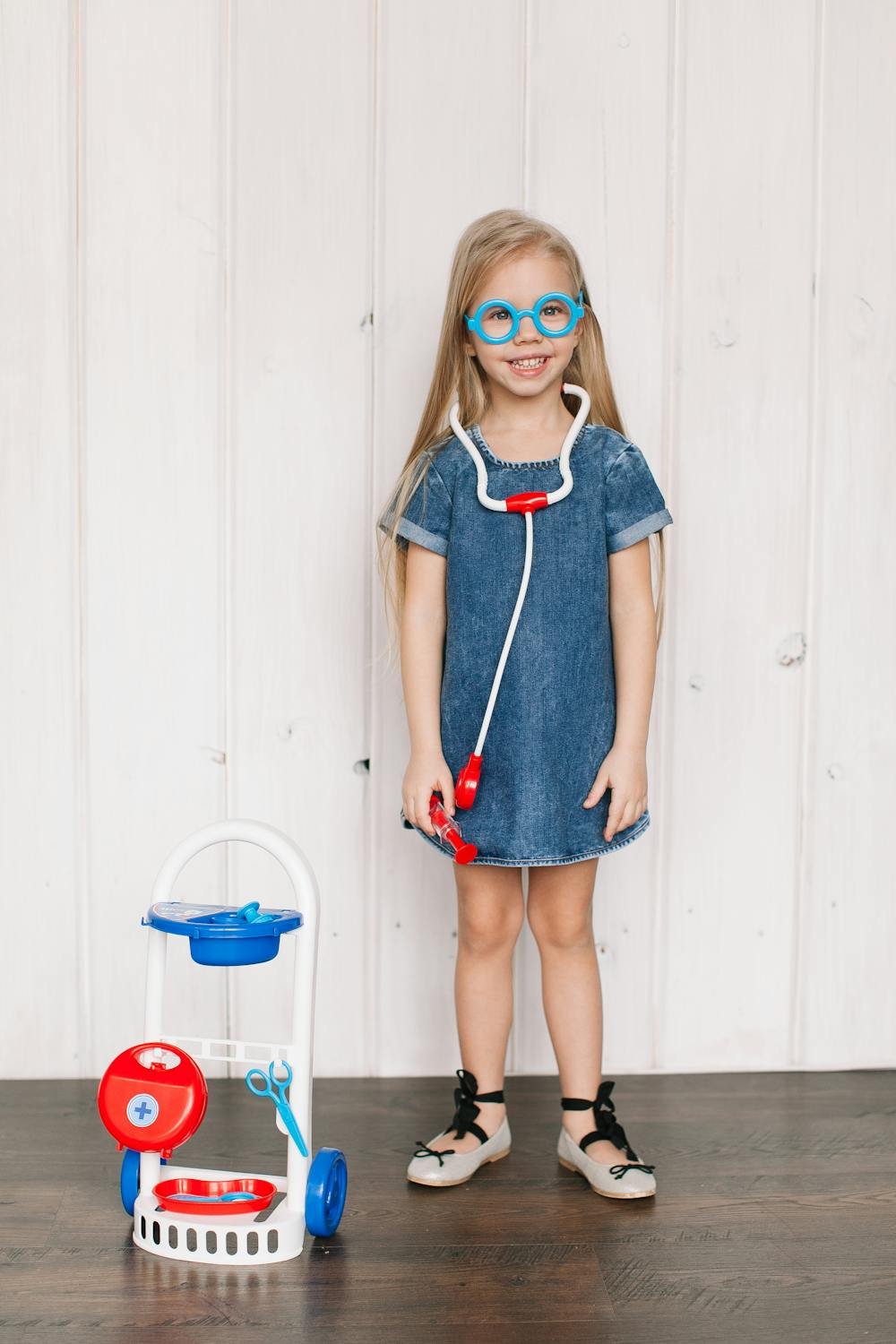
When a child decides to “be the doctor” in a pretend scenario, they have to remember the rules of the role, resist the impulse to switch characters mid-scene, and adapt when another child does something unexpected. That’s working memory, impulse control, and cognitive flexibility — all firing at once.
A 2023 study published in Frontiers in Psychology found that children’s ability to sustain a pretend role directly correlates with their self-regulation skills. The better a child performs an assumed role in play, the higher their self-regulation scores.
Psychologist Lev Vygotsky put it simply: children achieve their greatest self-control in play.
Why Executive Function Matters More Than IQ
Here’s what makes this even more compelling: executive function is a stronger predictor of kindergarten readiness than IQ. The Harvard Center on the Developing Child identifies these skills — working memory, mental flexibility, and self-control — as the foundation for everything from following multi-step directions to resolving a disagreement on the playground. And pretend play exercises all three simultaneously.
Think about what happens during a typical visit to Kids Hideout’s open play sessions. A child walks into our mini grocery store, decides she’s the cashier, remembers the “prices” she invented two minutes ago, adjusts when another child wants to pay with pretend coins instead of a credit card, and waits her turn to use the toy register. That single five-minute interaction fires up working memory, cognitive flexibility, and impulse control — the exact trio that researchers say separates kids who thrive in structured classrooms from those who struggle.
2. It Supercharges Language and Communication
Here’s a finding that surprises most parents: children use more complex language during pretend play than in any other context.
Psychologist Jerome Bruner discovered that the most sophisticated grammatical and pragmatic forms of language appear first in play activity — not in conversation with adults, not in the classroom, but in imaginative play scenarios.
A longitudinal study of preschoolers published in Early Childhood Research Quarterly confirmed this: children’s pretend play performance predicted their vocabulary scores months later. The researchers concluded that pretend play and language competence share symbolic processing as an underlying mechanism — meaning the same mental muscle that lets a child pretend a block is a phone also helps them understand that a word represents an idea.
When your toddler narrates a scene with their stuffed animals — assigning voices, creating dialogue, describing what’s happening — they’re building vocabulary and sentence structure in real time.

3. It Strengthens Emotional Regulation
This is one of the most studied and most compelling benefits.
In 2018, researchers Goldstein and Lerner ran a rigorous randomized trial with 97 preschoolers. Children who participated in dramatic play games three times a week for 30 minutes showed significantly less personal distress — both in observed behavior and self-reported feelings — compared to children who did block play or story time instead.
Goldstein used the analogy of a toolbox: dramatic play adds emotional tools that children carry into real-life situations. When a child pretends to be scared of a monster and then “defeats” it, they’re practicing how to manage fear in a controlled, safe environment.
The AAP’s 2018 clinical report, reaffirmed in January 2025, reinforces this: the mutual joy experienced during play regulates the body’s stress response. And when play is missing from a child’s life, toxic stress can disrupt the development of these critical emotional skills.
The Safe Space to Practice Big Feelings
What makes pretend play uniquely powerful for emotional development is the layer of psychological safety it provides. When a child pretends her stuffed bear is scared of the dark, she’s exploring her own fear — but at a comfortable distance. Zero to Three, a leading early childhood research organization, emphasizes that children under five process emotions primarily through play rather than conversation. They literally don’t have the vocabulary yet, so they act it out instead.
This is one reason we designed Kids Hideout around immersive role-play stations rather than passive entertainment. When a child “treats” a baby doll at our vet clinic or “comforts” a friend in the play kitchen after a pretend oven mishap, they’re rehearsing emotional responses they’ll eventually use in real life. It’s the same principle therapists use in play therapy — except here, kids direct the narrative themselves, which makes the emotional learning stick. For more on how screen-free environments support emotional growth, check out our deep dive for Fort Lauderdale parents.
4. It Develops Empathy and Theory of Mind
Theory of mind is the ability to understand that other people have different thoughts, feelings, and perspectives than your own. It’s one of the most important social-cognitive skills a child develops — and pretend play is one of the primary ways they build it.
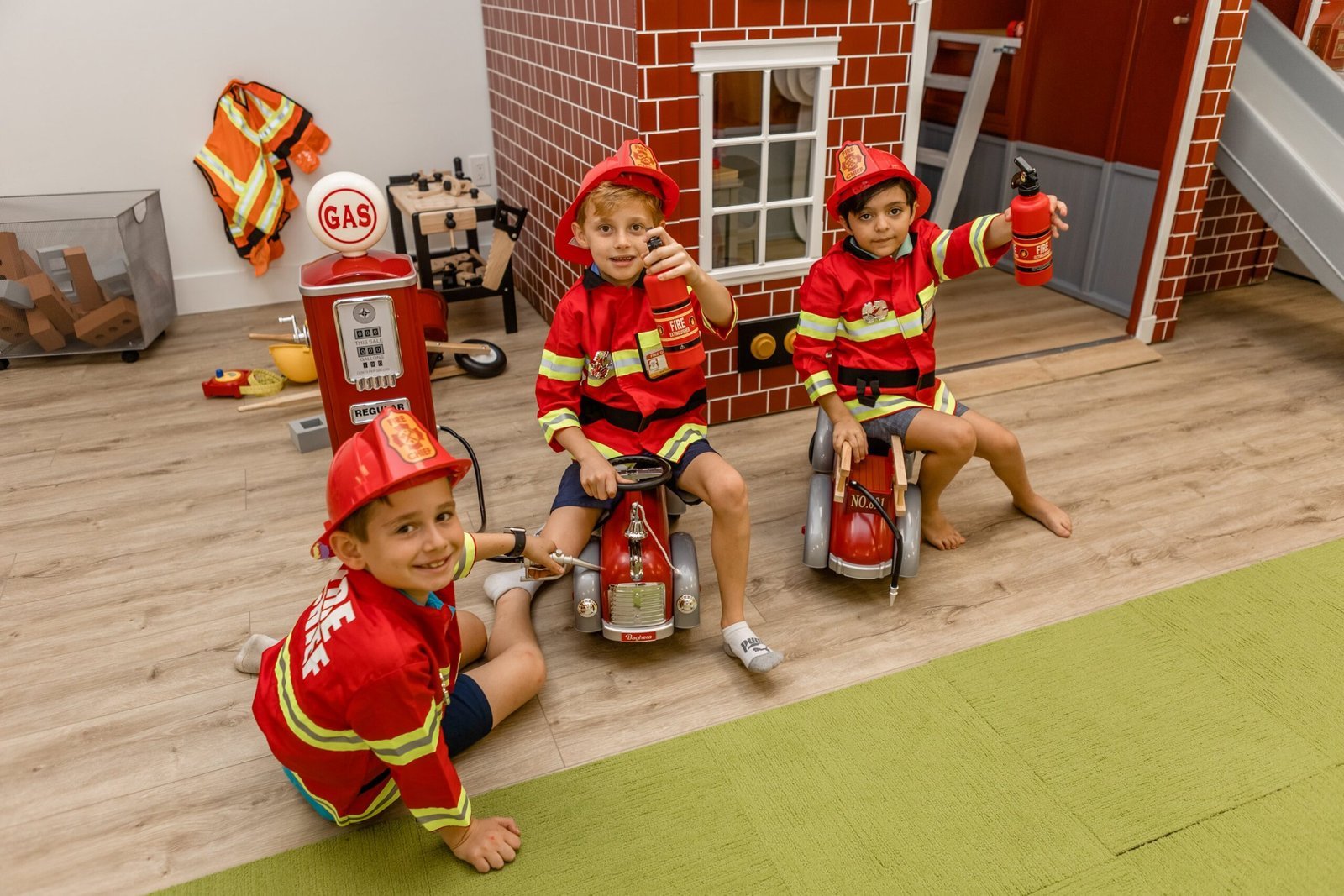
When your child pretends to be a firefighter saving someone, or a parent putting a baby to bed, they’re literally practicing seeing the world through someone else’s eyes. They have to think: what would this person feel? What would they say? What would they do next?
The Child Mind Institute reports that children who engage in more frequent and higher-level pretend play have more advanced understanding of others’ mental states. Pretend play with peers is positively associated with prosocial skills like perspective-taking, turn-taking, and friendship formation.
This is also where conflicts during play become valuable. When two kids disagree about who gets to be the teacher, they’re navigating different perspectives in real time — a foundational life skill disguised as a playground argument.
5. It Fuels Creativity and Divergent Thinking
Pretend play is inherently open-ended. There’s no correct answer, no right way to play, and no script to follow. That open-ended quality is exactly what makes it a breeding ground for creative thinking.
When a child turns a cardboard box into a spaceship or uses a blanket as a superhero cape, they’re practicing divergent thinking — the ability to generate multiple solutions to a single problem. This is the kind of thinking that fuels innovation, artistic expression, and adaptability later in life.
Vygotsky argued that creativity unfolds through a developmental process, with play as the primary driver of imagination. Research from the cultural-historical perspective confirms that mature forms of pretend play develop general creativity, imagination, and the ability to create meaning from symbols — skills that transfer directly to reading, math, and every creative endeavor a child will pursue.
Open-Ended Environments Spark the Biggest Ideas
Not all play environments are created equal when it comes to nurturing creativity. Research consistently shows that open-ended materials — props that can become anything a child imagines — produce far richer creative output than toys with a single predetermined function. A cardboard box becomes a rocket, a hospital bed, a treasure chest. The National Association for the Education of Young Children (NAEYC) recommends that early learning environments prioritize exactly these kinds of flexible, imagination-driven materials.
That philosophy is baked into every corner of Kids Hideout. Our themed stations — from the market to the construction zone — provide just enough context to ignite a storyline, then get out of the way. We’ve watched a three-year-old turn our play kitchen into a “restaurant on a spaceship” and a group of five-year-olds transform the vet station into an animal rescue helicopter. That kind of divergent thinking — the ability to see multiple possibilities where others see one — is the cognitive muscle behind innovation, problem-solving, and artistic expression. It’s also, as we explored in our article on the benefits of open play sessions, one of the biggest advantages of unstructured play time.
6. It Accelerates Social Skills and Cooperation
A 2024 meta-analysis published in Educational Psychology Review — the most comprehensive quantitative study of its kind — found a consistent positive relationship between pretend play and social competence, regardless of how social competence was measured.
Think about what sociodramatic play actually requires: children have to communicate clearly, assign and accept roles, share materials, follow agreed-upon rules, take turns, negotiate disagreements, and work toward a common storyline. That’s an advanced social workout for a four-year-old.
A separate 2023 experimental study in Early Childhood Research Quarterly showed that actively promoting the quality of children’s social pretend play directly improved their positive peer relationships. In other words, it’s not just that socially skilled kids play more — it’s that pretend play itself builds social skills.

7. It Prepares Children for Academic Success
This is where things get counterintuitive. Parents who worry that too much play takes away from “real learning” have it backwards.
In one of the most cited comparisons, Germany tested play-based kindergartens against direct-instruction centers. The result: children in play-based programs excelled in reading, mathematics, social-emotional adjustment, creativity, intelligence, and oral expression. The findings were so conclusive that Germany returned all its kindergartens to the play-based model.
Dr. David F. Bjorklund of Florida Atlantic University published a 2024 editorial in Neuroscience and Biobehavioral Reviews calling pretend play a “metaphoric multivitamin” for development, citing its association with enhanced executive function, language, and perspective-taking — all of which are critical for school readiness.
The National Association for the Education of Young Children (NAEYC) puts it clearly: play is essential for all children, birth through age 8, promoting self-regulation, language, cognitive, and social competencies as well as content knowledge across disciplines.
Play isn’t the opposite of learning. It’s the vehicle for it.
8. It Literally Builds Brain Architecture
The AAP’s landmark clinical report on play, published in Pediatrics and led by Dr. Michael Yogman, states it directly: “Play is not frivolous: it enhances brain structure and function and promotes executive function.”
The report describes play as offering a “singular opportunity to promote the social-emotional, cognitive, language, and self-regulation skills that build executive function and a prosocial brain.” MRI research shows that pretend play helps develop the prefrontal cortex and hippocampus — brain regions responsible for higher-order thinking, memory, and spatial navigation.
The report also carries a warning: when play and safe, stable relationships are missing from a child’s life, toxic stress can disrupt the development of executive function and prosocial behavior. In the presence of childhood adversity, play becomes even more important — not less.
This isn’t a soft recommendation. It’s a clinical finding.
What Neuroscience Tells Us About Play-Deprived Brains
The flip side of this research is sobering. When children are denied adequate opportunities for imaginative play — whether due to over-scheduling, excessive screen time, or environments that prioritize passive entertainment — the neural pathways that pretend play strengthens can remain underdeveloped. The American Academy of Pediatrics has been sounding this alarm for years, urging families to protect unstructured playtime as fiercely as they protect bedtime routines.
The good news? The brain is remarkably responsive to play at every stage of early childhood. Even children who haven’t had much exposure to pretend play catch up quickly once they’re given the right environment and a little encouragement. That’s part of why we see such remarkable transformations at Kids Hideout — a shy toddler who clings to a parent’s leg during their first open play visit is often leading a group adventure by their third. The CDC’s developmental milestones framework underscores that pretend play itself is a key marker of healthy development between ages 2 and 5 — not a luxury, but a benchmark.
What Pretend Play Looks Like at Every Age
Not sure if your child is already doing it? Here’s a quick guide:
12-18 months: Your child imitates real-life actions — holding a toy phone to their ear, pushing a toy car, pretending to drink from an empty cup. This is functional play, and it’s the beginning.
18-24 months: They start involving others — feeding a doll, then putting it to bed. Short pretend sequences that combine multiple actions.
2-3 years: The symbolic leap. A block becomes a phone. A pillow becomes a pizza. Objects start representing other things, and dolls become characters with feelings.
3-4 years: Structured role-playing appears. Your child creates scenarios, takes on roles, and builds short narratives. Play becomes social — two or three kids building a story together.
4-5 years: Complex cooperative pretend play. Defined roles, rules, and extended stories. This requires communication, negotiation, compromise, and teamwork.
5 and up: Pretend play becomes increasingly elaborate, with extended narratives and sophisticated social dynamics. This is the stage where many of the academic and social benefits compound.
🧒 Did You Know? Research shows that children who engage in regular pretend play score higher on tests of executive function, creativity, and social skills — benefits that last well into elementary school and beyond.
How to Support Pretend Play at Home (and Beyond)
You don’t need expensive toys. You need:
- Open-ended materials. Blocks, fabric scraps, cardboard boxes, dress-up clothes, play food, and art supplies. Toys that can be anything beat toys that can only be one thing.
- Time and space. Pretend play needs room to develop. It doesn’t thrive in five-minute windows between activities.
- Freedom to lead. Resist the urge to direct your child’s play. Let them assign you a role. Follow their lead. The learning happens when they’re in charge.
- Play environments designed for it. Indoor playgrounds with pretend play zones — kitchens, markets, dress-up areas, building stations — give children the context and props they need to dive into deep, sustained imaginative play.
Keep Reading: More on Play and Child Development
If this article opened your eyes to how much is happening inside your child’s imagination, you’ll love these related reads from our blog:
- What Is Open Play? — A complete guide to unstructured play sessions and why early childhood experts recommend them.
- Benefits of Open Play Sessions in Fort Lauderdale — How local families are using open play to support social, emotional, and cognitive development.
- Dance, Music, and Toddler Development — The science behind rhythm, movement, and early brain growth.
- Screen-Free Parenting and Tech-Free Spaces — Why unplugged play environments matter more than ever.
- Venue vs. At-Home Birthday Parties — Thinking about a pretend-play-themed party? Here’s how to decide what works for your family.
The Bottom Line
When your child stirs that empty pot and whispers “careful, it’s hot,” they’re not wasting time. They’re building executive function, language, empathy, creativity, social skills, emotional resilience, and literal brain architecture — all in one moment of make-believe.
The science is overwhelming. The AAP, NAEYC, and researchers from FAU to the Child Mind Institute agree: pretend play is not a break from learning. It is learning. The most powerful kind young children can do.
So the next time your kid disappears into an imaginary world, don’t interrupt. That’s their brain doing its most important work.
Kids Hideout is a boutique indoor playground in Fort Lauderdale built around pretend play — a real-life mini-city where kids explore, create, and imagine in a clean, screen-free environment designed for ages 0-8. Come see what screen-free play looks like.