If you’re a parent of a toddler or preschooler in Fort Lauderdale, you’ve probably had this experience: you hand your child a tablet or phone to get five minutes of peace — and suddenly an hour has gone by. You’re not alone, and you shouldn’t feel guilty. Screen time is the most common parenting challenge of this generation, and finding the right balance takes intention, strategy, and viable alternatives.
The good news? Creating screen-free spaces and routines for your kids is entirely possible — even in a world designed to keep them glued to screens. This guide will walk you through the research on why it matters, practical strategies for reducing screen time at home, and the best screen-free activities and spaces for kids in Fort Lauderdale and Broward County.
Why Screen-Free Time Matters for Young Children
Let’s start with what the experts say. The American Academy of Pediatrics (AAP) recommends:
- Under 18 months: Avoid screen time other than video chatting
- 18–24 months: If you introduce screens, choose high-quality programming and watch together
- 2–5 years: Limit screen time to one hour per day of high-quality content
Yet studies show that the average American child ages 2–5 spends over 2.5 hours per day on screens — well above the recommended limit. Why does this matter?
Excessive screen time in early childhood has been linked to:
- Delayed language development — A 2023 study in JAMA Pediatrics found that each additional hour of daily screen time at age 1 was associated with a 2x higher risk of language delay by age 2
- Reduced attention span — Fast-paced screen content trains the brain to expect constant stimulation, making it harder for children to focus on slower, real-world activities
- Sleep disruption — Blue light from screens suppresses melatonin production, and stimulating content before bed makes it harder for toddlers to fall and stay asleep
- Less physical activity — Every hour on a screen is an hour not spent running, climbing, dancing, or exploring
- Reduced social interaction — Screens replace face-to-face interaction with parents, siblings, and peers — the primary way young children learn communication and emotional regulation
The goal isn’t to eliminate screens entirely — that’s unrealistic for most families. The goal is to create intentional screen-free spaces and times where your child can engage in the kind of play that truly builds their brain, body, and social skills.
How to Create a Screen-Free Home Environment
The most effective approach to reducing screen time isn’t willpower — it’s environment design. When you set up your home to make screen-free play the easiest, most accessible option, your child will naturally gravitate toward it. Here’s how:
1. Designate Screen-Free Zones
Choose specific areas of your home where screens are never allowed. The most impactful screen-free zones are:
- The dining table — Mealtime is one of the most important times for family connection and conversation. Keep phones, tablets, and TV off during meals.
- Bedrooms — Screens in the bedroom are the #1 predictor of sleep problems in young children. Keep all devices out of bedrooms, especially at night.
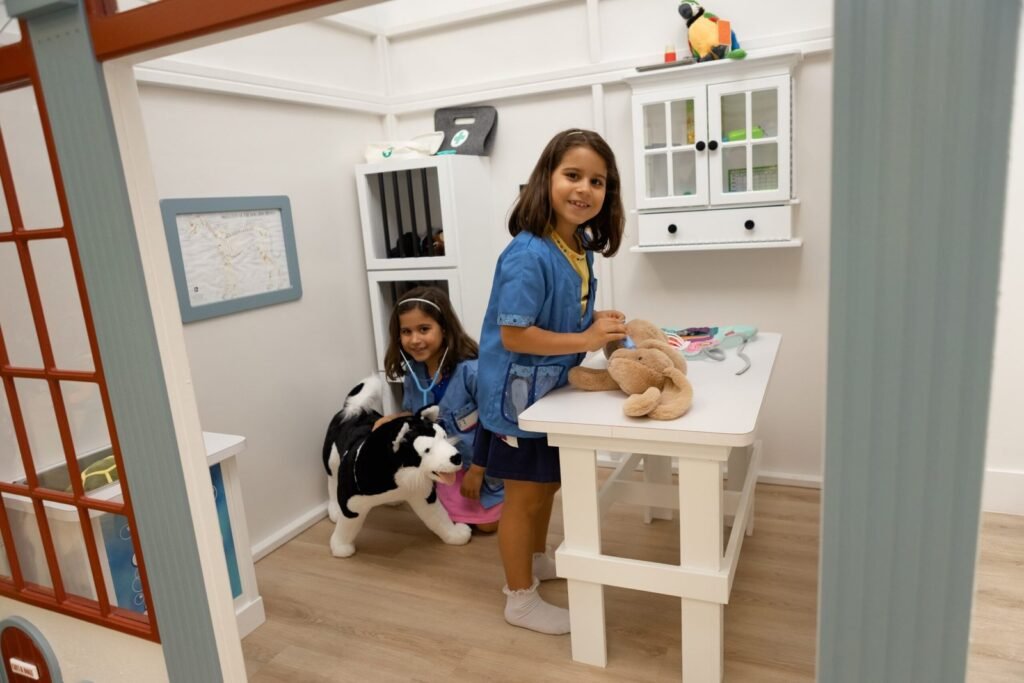
- The play area — Whether it’s a dedicated playroom or a corner of the living room, create a space stocked with toys, books, art supplies, and dress-up clothes that invite open-ended play.
2. Establish Screen-Free Times
In addition to screen-free zones, set specific times when screens are off-limits for the whole family:
- First hour after waking up — Start the day with breakfast, conversation, and physical movement instead of screens
- Last hour before bedtime — Replace screens with books, bath time, and calm play to support better sleep
- During playdates — When other children are over, keep screens off so kids learn to play together
- During outdoor time — If you’re at the park, the beach, or walking around the neighborhood, keep devices put away
3. Offer Real-World Alternatives
Children reach for screens when they’re bored, tired, or understimulated. The key is to have engaging alternatives readily available:
- Art supplies — Crayons, washable markers, playdough, and stickers give children a creative outlet
- Sensory bins — Fill a container with rice, dried pasta, water beads, or kinetic sand. Add scoops and containers. This can occupy a toddler for 30+ minutes.
- Dress-up clothes — A box of costumes, hats, and accessories invites hours of pretend play
- Books — Keep a rotating selection of age-appropriate books within your child’s reach
- Music and instruments — Maracas, tambourines, and a simple xylophone can spark spontaneous dance parties. Learn more about why music matters for toddler development.
Screen-Free Activities for Kids in Fort Lauderdale
One of the best strategies for reducing screen time is to get out of the house. When children are engaged in real-world experiences, they don’t ask for screens. Fort Lauderdale and Broward County offer an incredible variety of screen-free activities for toddlers and preschoolers:

Indoor Activities (Perfect for Rainy Days or Hot Afternoons)
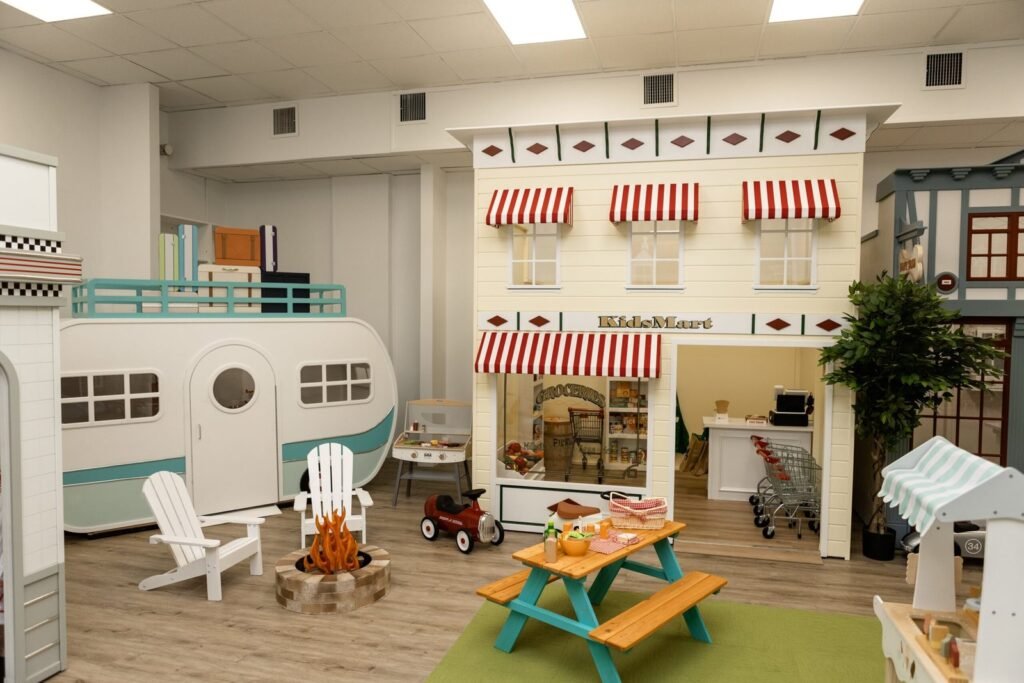
- Open play at Kids Hideout — Our indoor playground is 100% screen-free by design. Children explore pretend play stations, sensory activities, and creative zones. It’s the perfect rainy-day solution that gives kids physical activity and social interaction without a single screen.
- Music and movement classes — Programs like Zumbini and Tiny Toes Ballet at Kids Hideout give toddlers structured, screen-free enrichment that supports development.
- Library story time — Broward County libraries offer free story time sessions for toddlers and preschoolers. It’s a great way to build a love of books from an early age.
- Art classes — Many local studios in Fort Lauderdale offer toddler-friendly art classes that develop fine motor skills and creativity.
Outdoor Activities
- Beach play — Fort Lauderdale’s beaches are a natural playground. Sand, water, and shells provide endless sensory exploration for toddlers.
- Parks and nature trails — Hugh Taylor Birch State Park and Secret Woods Nature Center offer trails and green spaces perfect for young explorers.
- Splash pads — Several parks in Broward County have free splash pads where toddlers can cool off and play with water.
- Farmers markets — The Fort Lauderdale Farmers Market is a wonderful sensory experience for kids — colors, smells, textures, and the social experience of being in a community.
The Benefits of Tech-Free Play Spaces
There’s something powerful about bringing your child to a space that’s intentionally designed to be screen-free. At Kids Hideout, we made a deliberate choice: no TVs, no tablets, no digital entertainment. Everything in our space is designed to encourage hands-on, imaginative, physical play.
Why does this matter?
- It resets expectations. When children enter a space where screens simply don’t exist, they don’t ask for them. They immediately engage with the physical environment — exploring, touching, pretending, and playing.
- It normalizes screen-free fun. Regular visits to screen-free spaces teach children that fun and entertainment don’t require a device. This mindset carries over to home life.
- It gives parents permission to unplug too. In a screen-free environment, parents are more present with their children. Many parents tell us that open play sessions at Kids Hideout are their most connected time with their toddler all week.
- It promotes deeper play. Without the distraction of screens, children engage in longer, more complex play sequences — the kind of deep imaginative play that builds creativity, language, and problem-solving skills.
Read more about the 5 benefits of open play sessions for toddlers in our companion guide.
How to Handle Screen Time Pushback
Let’s be realistic: reducing screen time often means dealing with pushback — from your kids, and sometimes from other adults in their lives. Here are strategies that work:
- Use transition warnings. Instead of abruptly turning off a screen, give your child a 5-minute and 2-minute warning. “After this episode, we’re going to play with blocks.” Predictability reduces meltdowns.
- Offer a compelling alternative. Don’t just take the screen away — replace it with something your child will enjoy. “Let’s go to Kids Hideout!” or “Want to make playdough?” works better than “No more TV.”
- Model the behavior. Children mirror their parents. If you’re constantly on your phone, your toddler will want screens too. During screen-free times, put your own devices away.
- Be consistent. The first week of reducing screen time is the hardest. After that, new routines become normal. Stick with your boundaries, and your child will adapt.
- Don’t aim for perfection. Some days, screens will happen more than planned — and that’s okay. What matters is the overall pattern, not any single day.
A Realistic Screen-Free Schedule for Toddlers
Here’s what a balanced day might look like for a Fort Lauderdale family with a toddler:
| Time | Activity | Screen-Free? |
|---|---|---|
| 7:00 AM | Wake up, breakfast, morning play | ✅ Yes |
| 9:00 AM | Outing — park, playground, or errands | ✅ Yes |
| 11:00 AM | Lunch and quiet play | ✅ Yes |
| 12:00 PM | Nap time | ✅ Yes |
| 2:00 PM | Snack + 30 min educational show | 📺 Limited |
| 2:30 PM | Open play at Kids Hideout or outdoor play | ✅ Yes |
| 5:00 PM | Dinner prep (kitchen play alongside parent) | ✅ Yes |
| 6:00 PM | Dinner as a family | ✅ Yes |
| 6:45 PM | Bath, books, bedtime routine | ✅ Yes |
In this schedule, the child gets less than 30 minutes of screen time within a full day of engaging, developmentally rich activities. The key is that screen time is intentional — it has a clear start and end, and it’s surrounded by active, hands-on experiences.
Frequently Asked Questions About Screen-Free Parenting
How much screen time is okay for a 2-year-old?
The American Academy of Pediatrics recommends no more than one hour per day of high-quality programming for children ages 2–5, with a parent watching alongside when possible. For children under 18 months, screen time should be avoided other than video chatting with family.
What are the best screen-free activities for toddlers in Fort Lauderdale?
Fort Lauderdale offers excellent options including indoor playgrounds like Kids Hideout, beach play, library story time, music classes, splash pads, and nature trails at local parks. The key is variety — rotate between indoor and outdoor activities to keep things fresh and engaging.
Is it bad to use screens during meals?
Yes, experts recommend keeping mealtimes screen-free. Eating while watching screens teaches children to ignore their body’s hunger and fullness signals, which can contribute to overeating. Mealtime is also one of the best opportunities for family conversation and language development.
What if my child only wants to watch TV and won’t play independently?
This is common and usually temporary. Start by reducing screen time gradually (not all at once) and offering highly engaging alternatives like sensory bins, playdough, or a trip to an indoor playground. Most children adapt within 1–2 weeks. If your child struggles with independent play, start by playing alongside them for 10–15 minutes, then gradually step back as they become absorbed in the activity.
Start Small, Stay Consistent
You don’t have to overhaul your family’s screen habits overnight. Start with one small change — like making mealtimes screen-free, or replacing 30 minutes of daily screen time with an outing to the park or a visit to Kids Hideout. Small, consistent changes add up to big results for your child’s development, health, and happiness.
Visit Kids Hideout — Fort Lauderdale’s screen-free indoor playground →
Kids Hideout is Fort Lauderdale’s boutique indoor playground for ages 0–8. We offer daily open play, private birthday parties, field trips, and music and movement classes. Explore more parenting tips: benefits of open play | first birthday party themes | music and toddler development.