As a parent in Fort Lauderdale, you have countless options for your toddler’s enrichment — from swim lessons to art classes to early literacy programs. But if there’s one activity that research consistently shows has the broadest impact on early childhood development, it’s music and movement.
Dance and music classes for toddlers aren’t just about learning to keep a beat or memorize a song. They’re about building brain connections, developing motor skills, fostering emotional regulation, and creating some of the strongest parent-child bonds of early childhood. Here’s what the science says — and how Fort Lauderdale families can put it into action.
How Music Shapes a Young Child’s Brain
The first three years of life are a period of explosive brain development. During this time, your child’s brain is forming over one million new neural connections every second. Music is one of the most powerful stimuli for this process because it activates multiple brain regions simultaneously — auditory processing, motor coordination, language, memory, and emotional centers all light up when a child hears or makes music.
A landmark study from the University of Washington’s Institute for Learning & Brain Sciences found that babies who participated in musical play sessions showed enhanced brain processing of both music and speech patterns. In other words, music doesn’t just make kids musical — it makes them better communicators.
Other research has shown that early musical exposure:
- Improves language acquisition — The rhythm and melody in songs help toddlers recognize speech patterns, learn new vocabulary, and develop pre-reading skills
- Strengthens memory and attention — Learning songs with repetition builds working memory and the ability to focus
- Enhances mathematical thinking — Music introduces concepts like patterns, counting, and sequencing in an intuitive, enjoyable way
- Boosts emotional regulation — Calming music reduces cortisol levels, while upbeat music helps children learn to express and manage emotions
Why Dance Matters for Motor Development
While music develops the brain, dance develops the body — and for toddlers, physical development is just as critical. Learning to move their bodies to music helps children develop:
Gross motor skills: Jumping, spinning, stomping, and swaying all build the large muscle groups that toddlers need for running, climbing, and balancing. The CDC’s developmental milestones emphasize that physical activity through movement and play is essential for healthy motor development between ages 1 and 5.
Fine motor coordination: Activities like clapping hands, tapping sticks, shaking maracas, and using finger motions during songs develop the small muscle control that children need for writing, buttoning clothes, and using utensils.
Body awareness and spatial reasoning: Dance teaches children where their body is in space — how to move without bumping into others, how to follow directional cues (up, down, around), and how to coordinate bilateral movements (using both sides of the body together).
Rhythm and timing: Moving to a beat teaches children to anticipate patterns and coordinate their actions with external cues — a skill that transfers to reading, math, and even social interaction (like the natural rhythm of conversation).
The Social-Emotional Benefits of Music and Movement
Beyond the cognitive and physical benefits, music and dance classes are powerfully social experiences. In a group class setting, toddlers learn to:
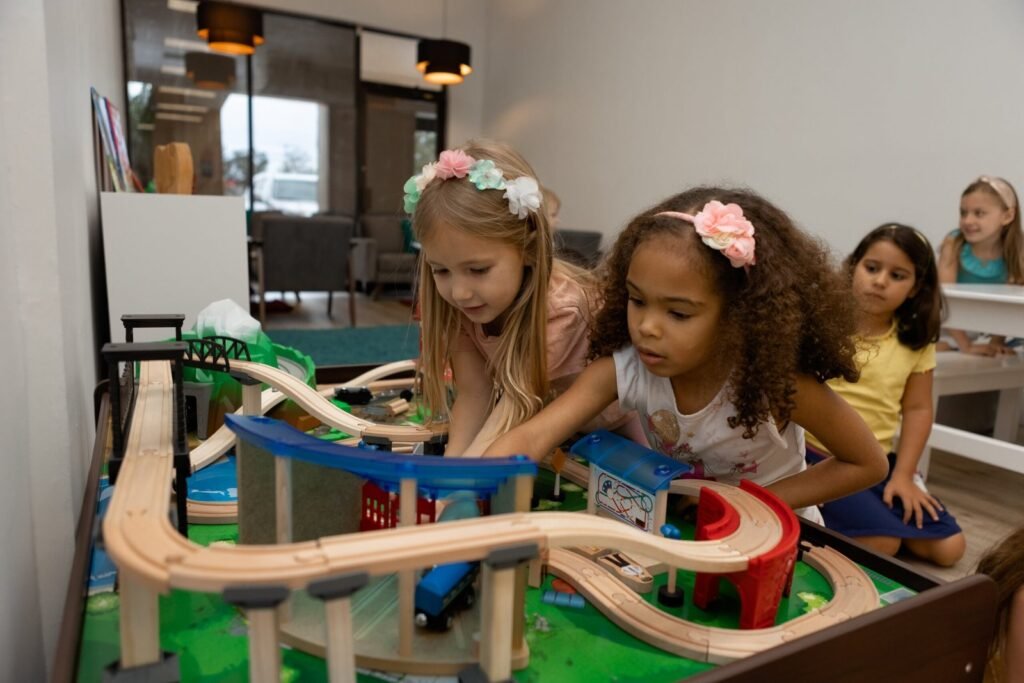
- Take turns — waiting for their chance with an instrument or in a movement circle
- Follow group instructions — “Everyone clap!” or “Let’s all jump together!”
- Express emotions safely — using movement to express excitement, joy, or even frustration
- Build confidence — performing a song or dance in front of others, even in a small group setting, builds self-esteem
- Connect with peers — shared musical experiences create bonds between children that can grow into lasting friendships
For children who are naturally shy or reserved, music classes offer a low-pressure way to participate in a group. They can start by simply observing, then gradually join in at their own pace. This is especially valuable for toddlers who may feel overwhelmed in louder, more chaotic play environments.
Mommy and Me Classes: Where Bonding Meets Development
One of the most popular formats for toddler music classes is the “Mommy and Me” (or parent-and-me) model, where a parent or caregiver participates alongside the child. This format is backed by strong research: a study published in Developmental Science found that parent-child musical interactions in the first year of life predict better communication skills at age two.
At Kids Hideout’s music and movement classes, parents and toddlers participate together in programs like Zumbini® (a Zumba-inspired music and movement program for ages 0–4) and Tiny Toes. These classes combine singing, dancing, instrument play, and bonding activities that strengthen your relationship with your child while supporting their development.
The parent-child format is particularly effective because:
- Children feel safe to explore and take risks when their parent is nearby
- Parents learn songs and activities they can continue practicing at home
- It creates a weekly routine of quality, screen-free bonding time
- Parents connect with other local families, building a support network
What Age Should You Start Music and Dance Classes?
The short answer: as early as possible. Research shows that musical exposure is beneficial from birth, and many programs (including Zumbini at Kids Hideout) accept babies as young as newborns with a parent or caregiver.
Here’s what to expect at different ages:
- 0–12 months: Babies respond to rhythm, melody, and their parent’s singing voice. In class, they’ll bounce, sway, and explore instruments with help from a caregiver. This age is the “sponge” period — they’re absorbing everything.
- 1–2 years: Toddlers start moving more independently — clapping, stomping, and attempting to sing along. They love repetition and will request favorite songs over and over.
- 2–3 years: Children become more coordinated and social. They can follow simple dance moves, play instruments with more control, and participate in group activities.
- 3–5 years: Preschoolers are ready for more structured movement like Tiny Toes, where they learn basic dance positions, creative expression, and performance skills.
What to Look for in a Kids Music or Dance Program
Not all music and dance classes are created equal. When choosing a program in Fort Lauderdale for your toddler, look for:
- Qualified instructors — Teachers should have training in early childhood music education, not just music performance. Look for certifications in programs like Zumbini, Music Together, or Kindermusik.
- Age-appropriate curriculum — The best programs adapt activities to developmental stages, not just ages. A good instructor knows the difference between what a 10-month-old and a 2-year-old can do.
- A safe, clean space — Toddlers will be on the floor, touching instruments, and interacting with materials. The environment should be clean, well-maintained, and free from hazards.
- Small class sizes — Intimate classes (8–12 children) allow for individual attention and reduce overstimulation for younger children.
- A fun, pressure-free atmosphere — The goal is joy, not performance. If a class feels competitive or overly structured for toddlers, it’s not the right fit.
Music and Dance Activities You Can Do at Home
You don’t need a class to bring music and movement into your child’s daily routine. Here are some simple activities Fort Lauderdale parents can try at home:
- Kitchen band: Pull out pots, wooden spoons, and plastic containers. Let your toddler experiment with making sounds and rhythms.
- Dance party: Put on your favorite music (or your child’s favorite) and dance around the living room together. No choreography needed — just move!
- Freeze dance: Play music and freeze when it stops. This game builds listening skills and impulse control.
- Sing during routines: Create simple songs for brushing teeth, getting dressed, or cleaning up toys. Routine songs help with transitions and build language skills.
- Musical walks: On your next walk around the neighborhood, listen for sounds together — birds, cars, wind, footsteps — and talk about what you hear. This builds auditory awareness.
These at-home activities complement what your child learns in formal classes and reinforce the neural pathways that music and movement create. For more ideas on screen-free activities for kids in Fort Lauderdale, check out our parenting guide.
Find Music and Movement Classes in Fort Lauderdale
Kids Hideout offers weekly music and movement classes including Zumbini® and Tiny Toes in our Fort Lauderdale studio. Our classes are designed for toddlers and preschoolers (ages 0–5) in a safe, intimate, and joyful environment. After class, families are welcome to stay for open play — so your child gets the best of both worlds: structured learning and free exploration.
Frequently Asked Questions About Toddler Music and Dance Classes
What is Zumbini and is it good for toddlers?
Zumbini® is a music and movement program created by Zumba® and BabyFirst for children ages 0–4 and their caregivers. It combines original music, movement, instruments, and bonding into a 45-minute class. Research shows it supports language development, motor skills, and parent-child bonding. Kids Hideout is a certified Zumbini provider in Fort Lauderdale.
At what age can toddlers start music and movement classes?
Most toddler music and movement programs, including Tiny Toes at Kids Hideout, accept children starting around age 2–3. At this age, classes focus on creative movement, rhythm, and basic positions rather than formal technique. The emphasis is on fun, self-expression, and building body awareness.
Do I need to participate with my child in class?
For most Mommy and Me style classes (like Zumbini), yes — parent participation is an important part of the experience. For Tiny Toes, which is designed for slightly older toddlers, parents typically observe from the side. Your instructor will let you know the format before your first class.
How is a music class different from just playing music at home?
Playing music at home is wonderful and we encourage it! But a structured class adds three key elements: social interaction with peers, guidance from a trained instructor who knows how to scaffold activities for your child’s developmental stage, and access to a variety of instruments and materials that most families don’t have at home.
Give Your Toddler the Gift of Music
The science is clear: music and dance are among the most powerful tools for early childhood development. They build brains, strengthen bodies, foster social connections, and create joyful memories between parents and children. And the best part? Your toddler will just think they’re having fun.
View our class schedule and sign up →
Kids Hideout is Fort Lauderdale’s boutique indoor playground for ages 0–8. We offer daily open play, private birthday parties, and weekly music and movement classes. Learn more about the benefits of open play for toddlers and how to plan a first birthday party in Fort Lauderdale.